Best Masonry Coating Options: The Definitive Editorial Guide
Best masonry coating options the preservation of masonry substrates—be it historic brick, structural concrete, or architectural stone—represents one of the most significant challenges in building envelope maintenance. Masonry is an inherently porous, “living” material that interacts constantly with the atmosphere. The result is not merely an aesthetic failure, but a systemic degradation of the building’s structural integrity.
In the contemporary American architectural context, the push for energy efficiency and color uniformity has led many property owners toward film-forming paints that were never intended for mineral-based surfaces. These coatings trap moisture behind the surface, leading to a phenomenon known as spalling, where the face of the brick or stone literally shatters under the pressure of trapped vapor or freezing moisture. To navigate the current market effectively, one must move beyond the marketing language of “waterproofing” and into the technical realities of vapor permeance and chemical bonding.
Selecting a protection strategy requires a forensic understanding of the substrate’s age, mineral composition, and the presence of previous treatments. A coating that provides an impenetrable barrier to wind-driven rain in a high-rise concrete structure might be catastrophic for a 19th-century lime-mortar brick wall. This article serves as a definitive deconstruction of the technologies available, prioritizing the long-term health of the masonry over temporary visual refreshes.
Understanding “best masonry coating options”
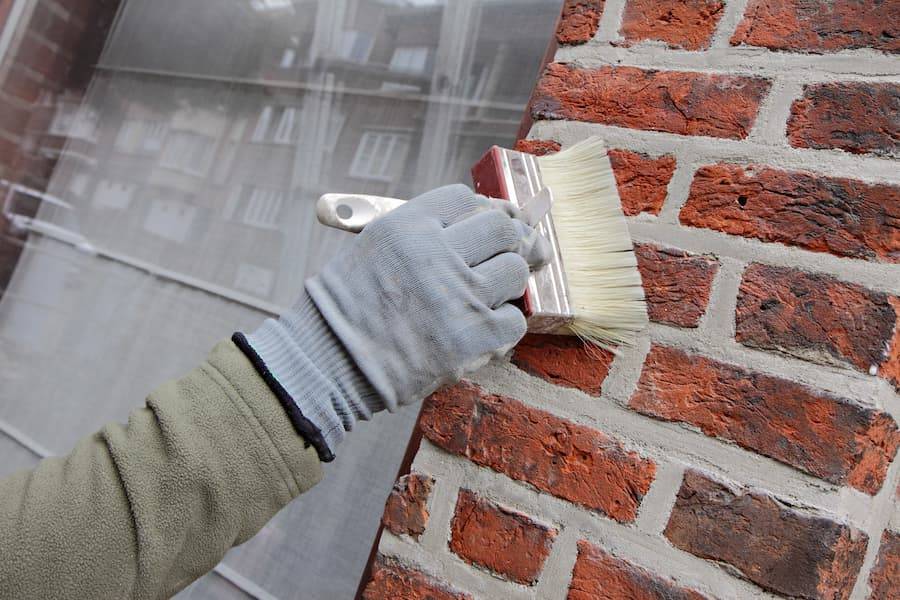
To evaluate the best masonry coating options, one must first differentiate between topical films and penetrating treatments. A penetrating treatment, like a silane-siloxane sealer or a potassium silicate paint, migrates into the pores of the masonry and creates a chemical bond within the mineral matrix itself. The primary risk in selection is ignoring the “Permeance Rating” or “Perm Value”—a measurement of how much water vapor can pass through the coating.
A multi-perspective analysis requires looking at the “Alkalinity Resistance” of the coating. Fresh concrete and mortar are highly alkaline, often reaching a pH of 12 or 13. This alkalinity can “burn” through standard oil-based or vinyl-acrylic paints, leading to saponification—a chemical reaction that turns the paint into a soapy, liquid mess.
Oversimplification in this sector often leads to the use of “waterproofers” on walls that need to breathe. If moisture enters the masonry from the interior—through bathroom steam, basement dampness, or rising damp from the soil—a waterproof coating on the exterior acts as a dam. When the winter freeze hits, that trapped water expands, blowing the face off the masonry.
Contextual Background: The Physics of Mineral Substrates
Best masonry coating options historically, masonry was protected by sacrificial coatings such as limewash. In the Limewash Era (pre-1900s), these coatings were chemically identical to the mortar and stone they covered. They didn’t “peel”; they simply eroded away, maintaining the health of the brickwork.
The Latex and Elastomeric Era (1960s–1990s) introduced thick, rubber-like coatings designed to bridge cracks in stucco and concrete. This era saw a spike in masonry failure as these “barrier” coatings trapped salts and moisture, leading to “sub-florescence”—the crystallization of salts beneath the paint film that exerts enough pressure to crush the mineral structure of the brick.
Today, we occupy the Mineral and Nano-Silicon Epoch. The most advanced systems available in the United States utilize “Sol-Gel” technology or potassium silicate binders. These systems do not form a plastic film. This technology offers the longevity of stone with the breathability of traditional limewash, representing the pinnacle of modern architectural preservation.
Conceptual Frameworks and Mental Models of Porosity Best Masonry Coating Options
Professional specifiers utilize specific mental models to visualize the interaction between water and stone.
1. The “Capillary Suction” Model
This model explains how masonry acts like a sponge. Water is pulled into microscopic pores by surface tension. A high-quality coating must “hydrophobize” these pores—lining them with a water-repellent layer without plugging them—so that liquid water is repelled while air remains free to move.
2. The “Osmotic Pressure” Framework
This model accounts for the movement of salts. When water evaporates through a coating, it leaves salts behind. If the coating is too tight, the salts crystallize behind the coating (cryptoflorescence). The goal of a masonry plan is to ensure the “evaporation zone” is at the surface, not behind the film.
3. The “Thermal Coefficient of Expansion” Logic
Masonry expands and contracts slowly compared to wood or metal. However, a thick coating (like an elastomeric) can have a different thermal “heartbeat” than the brick. In extreme sun, the coating may expand faster than the stone, leading to “Shear Failure” at the bond line.
Key Categories of Masonry Finishes and Technical Trade-offs
Choosing the correct intervention requires matching the coating’s chemistry to the substrate’s density.
The decision logic is often governed by the “Historic Status.” For buildings pre-dating 1930, film-forming paints are almost always the wrong choice. These structures rely on the movement of air through the entire wall thickness, making silicate or clear siloxane treatments the only viable best masonry coating options.
Detailed Real-World Scenarios Best Masonry Coating Options and Decision Logic
Scenario A: The Concrete Parking Structure (Coastal)
-
The Conflict: Salt-laden air causes rebar corrosion (rust) inside the concrete, leading to “concrete cancer.”
-
The Strategy: A silane-based penetrating sealer followed by a carbonation-resistant coating.
-
The Logic: The silane penetrates deep to keep salt water out, while the topcoat prevents carbon dioxide from lowering the pH of the concrete, which protects the steel inside.
Scenario B: The Historic Red Brick Townhouse
-
The Conflict: Efflorescence (white salt) is appearing on the surface, and the homeowner wants a modern color.
-
The Strategy: A mineral silicate paint system.
-
The Logic: Unlike latex, the silicate paint will not trap the salts. It allows the salts to pass through to the surface where they can be washed away, preventing the brick from crumbling.
Planning, Cost, and Resource Dynamics Best Masonry Coating Options
The economic profile of masonry work is skewed heavily toward surface preparation. Masonry cannot be “sanded” in the traditional sense; it must be chemically cleaned or gently abraded.
The “Opportunity Cost” of choosing a cheap acrylic on masonry is the potential loss of the substrate itself. If an elastomeric coating causes structural spalling, the repair cost is the replacement of the brickwork—a cost 20 times higher than the initial “premium” for a mineral system.
Tools, Strategies, and Support Systems
-
pH Testing Strips: Essential for new concrete. You cannot coat masonry with a pH above 10 without specialized primers.
-
Delmhorst Moisture Meters: Used with “deep probes” to check the internal moisture of the wall, not just the surface.
-
Low-Pressure Chemical Wash: Using surfactants to remove “atmospheric carbon” and pollutants without damaging the “fire-skin” of the brick.
-
Airless Sprayers with Stainless Steel Internals: Necessary for silicate paints, as the “liquid glass” binder can be corrosive to standard aluminum pumps.
-
Dichroic Filter Lenses: Used to evaluate color matching on historic stone without the “metamerism” effect (color changing under different light).
-
Breathability Gauges: Equipment used by engineers to measure the actual “Perm” value of an existing coating before deciding to over-coat or strip.
Risk Landscape and Failure Taxonomy
-
Type I: Saponification. The “soap” reaction on high-pH concrete.
-
Type II: Spalling. The mechanical failure of the masonry face due to trapped vapor.
-
Type III: Cryptoflorescence. Salt crystals growing inside the pores because a coating prevented them from reaching the surface.
-
Type IV: Alkali Burn. The discoloration of pigments (usually blues and greens) due to the reactive nature of the masonry.
Governance, Maintenance, and Long-Term Adaptation Best Masonry Coating Options
A masonry coating is an active participant in the building’s thermal and moisture management.
The Maintenance Protocol:
-
Annual Inspection: Look for “hairline cracks” in the coating. In a film-forming system, these act as funnels, letting water in but not out.
-
Salt Management: If white powder appears, do not just paint over it. This is a “lagging indicator” of a moisture problem behind the wall.
-
Cleaning Cycles: Every 3 years, a low-pressure wash with a pH-neutral cleaner prevents pollutants from etching the mineral finish.
-
Gasket and Sealant Review: The coating is only as good as the caulk. If window perimeters fail, water enters the masonry “envelope” from behind the coating.
Measurement, Tracking, and Evaluation
-
Leading Indicator: Substrate pH. Monitoring the neutrality of the masonry before application.
-
Lagging Indicator: Adhesion Pull-Testing.
-
Qualitative Signal: “Hydrophobic Beading.” If water no longer beads on a clear-sealed surface, the molecular shield has degraded and requires reapplication.
Common Misconceptions and Strategic Errors Best Masonry Coating Options
-
“Waterproof paint is always better.” False. On a wall, “waterproof” can be a death sentence. You want “water repellent” but “vapor permeable.”
-
“You can paint over old latex with mineral paint.” False. Mineral paint must touch the raw stone to silicify. Over-coating latex with silicate is a waste of resources.
-
“Pressure washing is the best way to clean brick.” False. High pressure destroys the hard “fire-skin” of the brick, making it more porous and vulnerable.
-
“Sealers don’t need reapplication.” False. UV light breaks down siloxane chains over 3–5 years.
-
“Concrete is the same as brick.” False. Concrete is much more alkaline and usually less porous than historic brick, requiring different resin types.
Ethical and Practical Considerations
In historic preservation, the guiding principle is “Reversibility.” Using a modern epoxy or high-build acrylic on a landmarked building is often considered an ethical failure because it cannot be removed without damaging the original material. Mineral systems are often preferred because they age “with” the building, eroding sacrificially rather than peeling in sheets.
Conclusion
The protection of masonry is a dialogue between chemistry and time. To select the best masonry coating options is to understand that the wall is a dynamic filter, not a static barrier. It requires the technical discipline to test for pH and moisture, the editorial judgment to reject “easy” topical solutions in favor of mineral-based systems, and the long-term vision to prioritize the health of the substrate over a five-year aesthetic warranty.